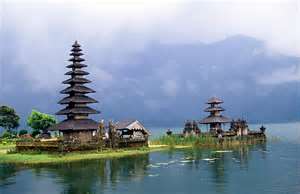
Denpasar
 Denpasar is Bali's capital city. Although the modern centre of
government departments, international banks, and many other offices, it
still retains its unique Balinese personality. This is strongly felt and
clearly seen in its many temples, universities and pleasant gardens,
which still maintain their presence and influence. Denpasar has the Pura
Jagatnatha, a temple dedicated to Bali's Supreme God, Sang Hyang Widi.
There are interesting statues of a turtle and two mystical dragons in
the temple, signifying the foundation of the world. The Pura's awesome
architecture resembles that of Balinese palace. It has now been
converted into a museum housing a fine collection of prehistoric and
modern art. The famous 4th century Pura Maospahit, is right next to Pura
Jaganatha.
Denpasar is Bali's capital city. Although the modern centre of
government departments, international banks, and many other offices, it
still retains its unique Balinese personality. This is strongly felt and
clearly seen in its many temples, universities and pleasant gardens,
which still maintain their presence and influence. Denpasar has the Pura
Jagatnatha, a temple dedicated to Bali's Supreme God, Sang Hyang Widi.
There are interesting statues of a turtle and two mystical dragons in
the temple, signifying the foundation of the world. The Pura's awesome
architecture resembles that of Balinese palace. It has now been
converted into a museum housing a fine collection of prehistoric and
modern art. The famous 4th century Pura Maospahit, is right next to Pura
Jaganatha.There is also an interesting place like; the government-supervised art centre, Sanggraha Kriya Hasta, which also home to a tremendous variety of handicraft and works of art. Taman Wedhi Budaya, meanwhile, is an arts centre with occasional exhibits of paintings, crafts and carvings, and holds traditional dances every evening. It is also the host of the annual Bali Arts Festival in June to July, with performances, exhibitions, art contest, and other activities of artistic nature.
The main street of Denpasar start with Gajah Mada Street in the west, Surapati Street in the centre, followed by Hayam Wuruk Street and ends as Raya Sanur Street in the east. There are many things of history and culture to see. The Puputan Square, with its heroic Catur Mukha, fondly commemorates the Balinese's suicidal stand against the Dutch. Until today, it is touchingly, a popular meeting place for locals in the evenings.
Kintamani
 The villages of Kintamani and Penelokan provide a great view of
the still active Mount Batur and its fantastic lake. Seven miles in
diameter and sixty feet deep, Batur caldera is simply astounding. From
Penelokan, take the road Kedisan on the shores of the lake where boats
can be rented to cross over to Trunyan. The spectacular mountainous
region around Kintamani with its deep Crater Lake and bubbling hot
springs, make this region a must to visit. Batur Lake is the largest
lake in Bali and the region offers some of the most spectacular views to
be found anywhere on the island. Batur Lake also provides water for an
underground network of streams and springs across the southern slopes of
the mountain. Kintamani is really great for day trips, trekking or
simply for getting away from it all for a few days.
The villages of Kintamani and Penelokan provide a great view of
the still active Mount Batur and its fantastic lake. Seven miles in
diameter and sixty feet deep, Batur caldera is simply astounding. From
Penelokan, take the road Kedisan on the shores of the lake where boats
can be rented to cross over to Trunyan. The spectacular mountainous
region around Kintamani with its deep Crater Lake and bubbling hot
springs, make this region a must to visit. Batur Lake is the largest
lake in Bali and the region offers some of the most spectacular views to
be found anywhere on the island. Batur Lake also provides water for an
underground network of streams and springs across the southern slopes of
the mountain. Kintamani is really great for day trips, trekking or
simply for getting away from it all for a few days.The district is the earliest known kingdom in Bali, dating from the tenth century. The evenings get cool up here but it's well worth the stay overnight to climb the volcano and watch the sunrise. Many cheap cottages are available here.
Kintamani can run through Payangan or from Denpasar through the Sangeh monkey forest, Plaga and Lampu, arriving to the north of Kintamani. Bemos to Kintamani are available from Ubud via Sakah (notable for its huge "Baby" statue). They also run via Tampaksiring and Bangli. From Denpasar bemos leave for Kintamani from the Batubulan terminal until late afternoon.
Tour to Kintamani is a very impressive experience where Kintamani Area have very beautiful panorama located in plateau and also encircled by mountain atmosphere with the windblast from Mount Batur. Carpet of Batur Lake seen far below and also there are local resident house beside of Batur Lake. Beside of that, Mount Batur which to date still be active growing its beautiful for Kintamani Area.
Ubud
 Ubud is Bali's cultural heart. This area is located in the cool
mountains, just one hour's drive north of the airport and the resorts of
southern Bali, this traditional country town is the home of the
Balinese Royal family and a flourishing arts centre. Most of Bali's
museums and galleries are centered in Ubud, but culture and history rich
Bali is peppered with museums and galleries. These museums and
galleries offer paintings, woodcarvings, textiles and all kinds of
souvenirs for viewing and also purchase. Puri Lukisan Museum in centre
of Ubud, Neka Museum in Campuhan, Seniwati Gallery and Agung Rai Museum
in Pengosekan is a must, to see the difference between creative art and
more commercial products.
Ubud is Bali's cultural heart. This area is located in the cool
mountains, just one hour's drive north of the airport and the resorts of
southern Bali, this traditional country town is the home of the
Balinese Royal family and a flourishing arts centre. Most of Bali's
museums and galleries are centered in Ubud, but culture and history rich
Bali is peppered with museums and galleries. These museums and
galleries offer paintings, woodcarvings, textiles and all kinds of
souvenirs for viewing and also purchase. Puri Lukisan Museum in centre
of Ubud, Neka Museum in Campuhan, Seniwati Gallery and Agung Rai Museum
in Pengosekan is a must, to see the difference between creative art and
more commercial products.Inspired by vibrant green rice paddies, mountains and colorful Balinese festivals, the elite artistic colony that began in the 1930's with eminent European painters, writers and musicians has now grown into a thriving arts centre, drawing increasing numbers of visitors. Ubud is also a flourishing crafts centre. Around Ubud the surrounding villages like Camphuan, Penestanan, Peliatan and Batuan specializing in crafts and woodcarving which are sold all over the island. There are hundreds of shops selling antiques, woodcarvings, crafts, textiles, paintings and jewelry as well as some of the best art museums in the country, dozens of art studios, an excellent local craft market, and galleries selling local and international art.
Ubud's role as the epicenter of Balinese culture makes it the perfect place to see traditional Balinese dance and drama. From the early 1920's the royal family ensured that most talented teachers of dance, music and drama were brought to Ubud to entertain the King and pass on their knowledge. Dances like Legong, Ramayana, Baris, Kecak and Sanghyang (the fire dance) are performed nightly in Bona village, just 15 minutes drive from Ubud. Bali's most accomplished dancers, musicians, painters and carvers live in just 10 square kilometers.
Balinese Hinduism remains stronger in Ubud than elsewhere in Bali, cremation ceremony or celebration of some kind. Balinese Hinduism is distinct from that of India and has absorbed the animism of Bali's pre-Hindu ancestors - inspired by the extraordinary beauty of Bali's landscapes - rice fields, mountains, river gorges, villages and ancient temples.
Visit Ubud Monkey Forest, a natural forest reserve popular with both locals and tourists. Inhabited by wild monkeys who will steal the camera, bananas, handbags, toupees, etc. These mischievous monkeys provide lots of entertainment. Interesting meandering paths lead to charming places like the bathing temple surrounded by lush remnants of ancient forest. Just off the main square a lovely arched stone bridge leads to the Hindu elephant-headed Lord Ganesh overlooking a small, square, moss-covered pool where several koi swim at his feet.
Trunyan
 Trunyan is another ancient village inhabited by people who call
themselves the “Bali Aga” or old Bali who live in ways that are vastly
different from other Balinese. The Bali Aga's temple in this village is
named Puser Jagat, meaning Navel of the Universe. Its architecture is
highly unusual, and stands in the protective shade of a massive banyan
tree.
Trunyan is another ancient village inhabited by people who call
themselves the “Bali Aga” or old Bali who live in ways that are vastly
different from other Balinese. The Bali Aga's temple in this village is
named Puser Jagat, meaning Navel of the Universe. Its architecture is
highly unusual, and stands in the protective shade of a massive banyan
tree.The Bali Aga has a strange way of burial. Instead of cremating their corpses, the Bali Aga simply places them under this banyan tree. The odor is mysteriously masked by a special arboreal fragrance emitted by the banyan tree.
The village of Trunyan is squeezed tightly between the lake and the outer crater rim of Batur, an almighty volcano in Kintamani. This is a Bali Aga village, inhabited by descendants of the original Balinese, the people who predate the arrival of the Hindu Majapahit kingdom in the 16th century. It is famous for the Pura Pancering Jagat temple, but unfortunately visitors are not allowed inside. There is also a couple of traditional Bali Aga-style dwellings, and a large banyan tree, which is said to be more than 1,100 years old. At Kuban sub-village close to Trunyan is a mysterious cemetery that is separated by the lake and accessible only by boat, there is no path along the steep walls of the crater rim.
Unlike the Balinese people, Trunyan people do not cremate or bury their dead, but just lay them out in bamboo cages to decompose, although strangely there is no stench. A macabre collection of skulls and bones lies on the stone platform and the surrounding areas. The dead bodies don't produce bad smells because of the perfumed scents from a huge Taru Menyan tree growing nearby. Taru means 'tree' and Menyan means 'nice smell'. The name of Trunyan was also derived from these two words. The women from Trunyan are prohibited from going to the cemetery when a dead body is carried there. This follows the deeply rooted belief that if a woman comes to the cemetery while a corpse is being carried there, there will be a disaster in the village, for example a landslide or a volcanic eruption. Such events have been frequent in the village's history, but whether women had anything to do with it is a matter of opinion.
Sanur Beach
 Sanur is one of Bali's biggest traditional villages but it's
also one of the most established tourist areas. Sanur was Bali's first
beach resort but still retains its Balinese character and old style
village ambiance. On the southeastern side of Bali, Sanur beach is
easily reachable from Denpasar, about a 5 to 10 minute drive. Sanur is
an excellent site to watch the sun rises, as we jog along the white
sandy beach. Being one of the first resorts developed in Bali, Sanur
maintains its traditions. Only a stone thrown away from the beach,
ancient temples stand as solemn as they have been in centuries past.
Sanur is one of Bali's biggest traditional villages but it's
also one of the most established tourist areas. Sanur was Bali's first
beach resort but still retains its Balinese character and old style
village ambiance. On the southeastern side of Bali, Sanur beach is
easily reachable from Denpasar, about a 5 to 10 minute drive. Sanur is
an excellent site to watch the sun rises, as we jog along the white
sandy beach. Being one of the first resorts developed in Bali, Sanur
maintains its traditions. Only a stone thrown away from the beach,
ancient temples stand as solemn as they have been in centuries past.Palm-lined beach, facing the Indian Ocean towards the east, Sanur is an excellent place to see the sun rise in the morning. "Bali is the morning of the world", it is the right sentence for Bali if we has visited Sanur. Offshore reefs protect the beach against the waves, and make it popular for windsurfing, boating, and other water sports. It is one of the first areas where one can find good hotels, restaurants, shops, and other tourist facilities.
It's also the place for some of Bali chic fashion shops, hot hotels and well-known restaurants. It is a good location to explore the rest of Bali. Fine hotels, restaurants and modern entertainment venues complement traditional village activities like drama and dance, so it's a good place to enjoy the delights of a tropical island and gain a real appreciation of Balinese culture and local life. Gradual and early development has meant that Sanur has grown alongside the village, with hotels located right next door to local meeting halls and Brahmanic temples. Many hotels have expansive gardens that face the ocean in a picturesque unbroken seaside promenade.
Kuta Beach
 Once a lonely little village on the road from Denpasar to Bukit
Peninsula, Kuta is now the tourist Mecca of Bali, popular mainly among
the young and adventurous. Kuta beach is one of the first favorite
beaches discovered by tourist. Coconut trees line the sand beach as far
as the eyes can see towards the north stopped by the runway of
Denpasar's airport far in the west. The sunset in Kuta is most
breathtaking. On the south, the beach is fenced by the airport's runway,
which gives the visitors a breathtaking landing experience. Kuta Beach
bustles with tourists' vendors and locals. It's the most popular beach
in Bali and the island's number one party zone. The beach stretches as
far north as the eyes can see. As short walk away north, the waves will
invite to surfing. Rapid development and an influx of visitors haven't
kept the surfers away and Kuta still remains one of Bali's best surfing
beaches and a great place to enjoy a beach lifestyle.
Once a lonely little village on the road from Denpasar to Bukit
Peninsula, Kuta is now the tourist Mecca of Bali, popular mainly among
the young and adventurous. Kuta beach is one of the first favorite
beaches discovered by tourist. Coconut trees line the sand beach as far
as the eyes can see towards the north stopped by the runway of
Denpasar's airport far in the west. The sunset in Kuta is most
breathtaking. On the south, the beach is fenced by the airport's runway,
which gives the visitors a breathtaking landing experience. Kuta Beach
bustles with tourists' vendors and locals. It's the most popular beach
in Bali and the island's number one party zone. The beach stretches as
far north as the eyes can see. As short walk away north, the waves will
invite to surfing. Rapid development and an influx of visitors haven't
kept the surfers away and Kuta still remains one of Bali's best surfing
beaches and a great place to enjoy a beach lifestyle.While the surfers are still part of the Kuta scene, it's the shopping, nightlife and party vibes that attracts thousands of visitors. There's a huge choice of accommodation, restaurants and entertainment. The accommodation in Kuta range from a modest home stay for a few dollars a night to luxurious, five star, international hotels costing several hundred to several thousand dollars a night. Legian Street, situated directly behind the row of hotels that face the beach, is lined with shops of all varieties. We can find any Balinese handicrafts here, from the least expensive to the most exquisite; or unique stores such as the leather store staffed by two young Balinese men that will perfectly sculpt a leather jacket. (They are all extremely talented artists). _At night, Kuta is alive with night life. Western influences create discotheques, dance clubs, and pubs. Gastronomical demands inspire a multitude of restaurants, serving traditional Indonesian and Balinese food to various ethnic meals from Japan, Switzerland, etc. As if these were not enough, various Balinese dance performances are staged in Kuta every night. One of the best Kecak performances is found in Kuta.
Legian Beach
 Close to the Kuta action but far enough for some down time,
Legian is less hectic than downtown Kuta but still has a funky nightlife
zone. Legian is a no-holds barred beach where locals, expatriates and
tourists mingle, bargain with the best, play paddle ball and football,
indulge in a massage and manicure, catch up on reading, meditate,
exercise. Legian and Seminyak were small villages a few years ago a
short distance from Kuta.
Close to the Kuta action but far enough for some down time,
Legian is less hectic than downtown Kuta but still has a funky nightlife
zone. Legian is a no-holds barred beach where locals, expatriates and
tourists mingle, bargain with the best, play paddle ball and football,
indulge in a massage and manicure, catch up on reading, meditate,
exercise. Legian and Seminyak were small villages a few years ago a
short distance from Kuta.Over the last few years, accommodation has expanded around Legian with many simple family-owned guest houses upgraded; complemented by boutique style hotels and first class hotels. Kuta is literally five-minute taxi ride away. Sunset is peak time at Legian Beach, when the beach bars fill up, the football field is at its busiest and the locals knock off work and wade fully clothed, skirts swirling, into the waves. Now part of the greater Kuta area, both offer quieter alternatives and a more sophisticated nightlife scene focusing on dining-out and socializing rather than full-on partying.
Jimbaran Beach
 Jimbaran is directly south of the airport, on the way from
Denpasar towards Nusa Dua. Jimbaran village is the narrow neck of Bali
Island, and thus it has two remarkably different beaches. On the west,
Jimbaran Beach faces the Jimbaran Bay, recently lined by new luxurious
resorts. On the east, the beach faces the body of water sheltered by
Benoa Harbor. Jimbaran is a sleepy cove where fleets of fishing boats
color the scene. Formerly a relatively quiet area, its image has
improved dramatically with the opening of the beautiful Four Season's
Resort and the Inter-Continental. The last couple of years, it has
become even busier still with grilled seafood restaurants going up at a
rapid pace along the beach, attracting local families and tourists in
droves.
Jimbaran is directly south of the airport, on the way from
Denpasar towards Nusa Dua. Jimbaran village is the narrow neck of Bali
Island, and thus it has two remarkably different beaches. On the west,
Jimbaran Beach faces the Jimbaran Bay, recently lined by new luxurious
resorts. On the east, the beach faces the body of water sheltered by
Benoa Harbor. Jimbaran is a sleepy cove where fleets of fishing boats
color the scene. Formerly a relatively quiet area, its image has
improved dramatically with the opening of the beautiful Four Season's
Resort and the Inter-Continental. The last couple of years, it has
become even busier still with grilled seafood restaurants going up at a
rapid pace along the beach, attracting local families and tourists in
droves.Located on Bali's west coast, Jimbaran offers a small-secluded beach area, where tranquility and perfect peace is the perfect antidote to a stressful world. The land gently slopes away from the beach revealing exclusive celebrity haunts hidden under a canopy of leafy tropical forest. A popular spot for windsurfing and sailing small craft, which are available for rent, Jimbaran's grey sand and calm waters are attracting more people but the beach still has a sleepy feeling. A day at Jimbaran is made even more popular because of the all the wonderful options to eat. Choose from simple local food, the freshest fish or 5-star luxury. It is also a popular spot for sunset.
Nusa Dua
 Bali's most prestigious resort area, Nusa Dua is where the
tourists will find international world, class luxury hotels elegantly
lining beautiful white sands. Located on the Bukit peninsula, in the
southern part of Bali, approximately 10 km from the international
airport. It is quiet and exclusive with superb facilities.
Bali's most prestigious resort area, Nusa Dua is where the
tourists will find international world, class luxury hotels elegantly
lining beautiful white sands. Located on the Bukit peninsula, in the
southern part of Bali, approximately 10 km from the international
airport. It is quiet and exclusive with superb facilities.Crystal clear water and stretches of white sandy beach of Nusa Dua makes Nusa Dua a perfect spot for luxurious resorts to which exhausted the bodies, after a Barong performance at Batubulan and a long climb of the steps of the Mother Temple Besakih, will want to rest. Some of the most sumptuous and luxurious hotels in the world find their home in Nusa Dua Bali. We can tee off into the sunset, while watching the gentle waves come from the blue sea and caress the banks surrounding the luscious greens. Tranquil swimming pools under the coconut trees seem to be one with the distant blue sea. Art galleries and numerous shops surround them.
Nusa Dua is really about taking it easy and relaxing in total luxury. As most of the hotels are 5 stars, every comfort is at our disposal as well as a gorgeous white sand beach. Nusa Dua was designed for the luxury conscious with a heavy concentration of big name hotels lining the beautiful white sand beach. The kind of activities on offer gives a flavor of Nusa Dua. The Bali Golf and Country Club, an immaculately landscaped 18 holes ocean view course. The Bali International Lawn Tennis & Lawn Bowls Club next to the Galleria Nusa Dua a spacious shopping mall with boutiques and up market restaurants. Close by Chandra Koka Amphitheatre provides a venue for traditional entertainment including arts festivals like the Nusa Dua Arts and Culture Festival. Stroll to the northern end of Nusa Dua for parasailing, jet skis, snorkeling/diving trips or better still, head for Tanjung Benoa.
Some of the resorts have private beaches but most areas are accessible. The stretch past the Hilton Resort has been a public beach and during the wet season, the outer reef there is a popular surf break. At present we will find some simple warungs selling good food at cheap prices along this beautiful stretch of white sandy beach that offers excellent swimming conditions in a protected lagoon.
Tanjung Benoa
 Tanjung Benoa, or the Benoa peninsula just north of Nusa Dua has
become much busier over the years and has a wide range of accommodation
including prestigious resorts like 'The Conrad'. Benoa peninsula is a
scenic 5 kilometers of coconut palms and fine sand. The area is the
almost exclusive home of luxury hotels, private villas, fine
restaurants, open-air cafes and water sports facilities. The resort has
become busier over recent years with more hotels Bali Resort and Spa
joining impressive resorts like the Aston Bali. The shape of the beach,
also makes Tanjung Benoa perfect for water sports with no shortage of
shops catering to marine sports enthusiasts.
Tanjung Benoa, or the Benoa peninsula just north of Nusa Dua has
become much busier over the years and has a wide range of accommodation
including prestigious resorts like 'The Conrad'. Benoa peninsula is a
scenic 5 kilometers of coconut palms and fine sand. The area is the
almost exclusive home of luxury hotels, private villas, fine
restaurants, open-air cafes and water sports facilities. The resort has
become busier over recent years with more hotels Bali Resort and Spa
joining impressive resorts like the Aston Bali. The shape of the beach,
also makes Tanjung Benoa perfect for water sports with no shortage of
shops catering to marine sports enthusiasts.Right at the tip of the peninsula is the quiet port of Tanjung Benoa, with its village like alleyways and rows of traditional fishing boats and yachts. Offshore "Turtle Island" is the site of a sacred sea temple. Tanjung Benoa has something for everyone -especially if we are a water sport fun. Snorkeling, diving, windsurfing, water skiing, powerboats, banana boats and reef fishing. (The reef is just 200 meters from the shoreline at the northeastern tip)
Sangeh Monkey Forest
 It is located near to Sangeh village; the renowned 6 hectares of
Bali Sangeh Monkey Forest are filled with giant nutmeg trees capable of
growing as high as 40m. Sangeh Monkey Forest near the village of
Sangeh, in southwestern Bali, has six hectares of forestland with giant
nutmeg trees. The main attractions here are the hordes of funny yet wise
Balinese monkeys inhabiting both the trees and the temple, Pura Bukit
Sari, found in the heart of the forest. The monkeys of the forest are
believed to be sacred and indeed will approach anyone paying respects at
the temple. But visitors should be aware that these monkeys are
attracted to shiny objects, so cameras and jeweler should be left behind
or kept well hidden under clothes or in a bag when exploring Sangeh
Bali.
It is located near to Sangeh village; the renowned 6 hectares of
Bali Sangeh Monkey Forest are filled with giant nutmeg trees capable of
growing as high as 40m. Sangeh Monkey Forest near the village of
Sangeh, in southwestern Bali, has six hectares of forestland with giant
nutmeg trees. The main attractions here are the hordes of funny yet wise
Balinese monkeys inhabiting both the trees and the temple, Pura Bukit
Sari, found in the heart of the forest. The monkeys of the forest are
believed to be sacred and indeed will approach anyone paying respects at
the temple. But visitors should be aware that these monkeys are
attracted to shiny objects, so cameras and jeweler should be left behind
or kept well hidden under clothes or in a bag when exploring Sangeh
Bali.Near Sangeh village, about 20 km north of Denpasar. This forest of approximately 6 hectares is filled with giant nutmeg trees that can grow up to 40m high. The main attractions are the hordes of Balinese monkeys that inhabit the trees and the temple, Pura Bukit sari, located in the heart of the forest. The temple, Pura Bukit Sari, was originally built around the 17th century as an agricultural temple and has been restored several times, most recently in 1973. In the central courtyard, a large statue of Garuda, an old carving of uncertain date, symbolizes freedom from suffering and the attainment of amerta, the elixir of life. The forest of nutmeg trees in which it lies was presumably planted deliberately a long time ago, for it is unique in Bali.
Besakih Temple (Mother Temple)
 Over a thousand years old, Besakih Temple is known as the
"Mother Temple of Bali" Perched on the slopes of Mount Agung, at a lofty
1,000 meters (3,000 feet). Besakih is the biggest and holiest of all
the Balinese temples. Bali's mother temple stands against a stupendous
mountain backdrop on the southeastern slopes of Mount Agung. Named after
the Dragon God believed to inhabit the mountain, it's said to be the
only temple where a Hindu of any caste can worship.
Over a thousand years old, Besakih Temple is known as the
"Mother Temple of Bali" Perched on the slopes of Mount Agung, at a lofty
1,000 meters (3,000 feet). Besakih is the biggest and holiest of all
the Balinese temples. Bali's mother temple stands against a stupendous
mountain backdrop on the southeastern slopes of Mount Agung. Named after
the Dragon God believed to inhabit the mountain, it's said to be the
only temple where a Hindu of any caste can worship.Eighteen separate sanctuaries belonging to different regencies and caste groups surround the three main temples dedicated to Shiva, Brahma and Vishnu. To the Balinese, visiting the temple sanctuaries is a special pilgrimage. The mountain top setting gives it an almost mystical quality. The largest on the island, this massive complex of 35 small temples attracts staggering numbers each year, being the main point of pilgrimage for Balinese Hindus. Steps ascend through split gates to the main courtyard where the Trinity shrines, dedicated to Shiva, Brahma, and Vishnu, are wrapped in cloth and decorated with flower offerings. There are number of temples but many of their inner courtyards are closed to visitors. Tracing its origins to prehistoric times, the complex was untouched by the great 1963 eruption of Mount Agung, which wiped out surrounding villages. The complex also houses the oldest remaining gamelan instrument in Bali called selonding. The temple ceremony (odalan) falls on the 10th month of the Balinese calendar, in April. If traveling, try to reach Pura Besakih before 9am, when many tourist buses start to arrive, so that we can take in the lovely temple in the quiet Balinese morning.
Tanah Lot Temple
 Tanah Lot is located about 12 kilometers from Tabanan City and
20 kilometers from Denpasar. The area comprises a wondrous mixture of
natural beauty and sheer human effort. Here lies an idyllic white sand
beach with crashing waves, complemented by a small yet majestic temple.
This temple, known as Pura Tanah Lot, juts out to sea on a rocky
background. Tanah Lot attracts throngs of both locals and tourists
daily. Most come here longing to catch a glimpse of the romantic Tanah
Lot sunsets, a regular occurrence during the dry season (April to
November).
Tanah Lot is located about 12 kilometers from Tabanan City and
20 kilometers from Denpasar. The area comprises a wondrous mixture of
natural beauty and sheer human effort. Here lies an idyllic white sand
beach with crashing waves, complemented by a small yet majestic temple.
This temple, known as Pura Tanah Lot, juts out to sea on a rocky
background. Tanah Lot attracts throngs of both locals and tourists
daily. Most come here longing to catch a glimpse of the romantic Tanah
Lot sunsets, a regular occurrence during the dry season (April to
November).The royal Taman Ayun temple was built by one of the last priests to come to Bali from Java in the 16th century. The temple stands on the top of a huge rock, surrounded by the sea and is one of Bali's most important sea temples. Tanah Lot pays homage to the guardian spirits of the sea. Ancient rituals pay homage to the guardian spirits of the sea. Poisonous sea snakes found in the caves at the base of the rocky island are believed to be guardians of the temple, standing Virgil against evil spirits and intruders. At the base of the rocky island are poisonous sea snakes believed to guard the temple from evil spirits and intruders. The best time to see Tanah Lot is in the late afternoon when the temple is in silhouette.
Tampak Siring
 Pura Tirta Empul is the temple of Tampak Siring, built around a
sacred spring. Tampak Siring is an inscription dates the spring all the
way back to 926AD; and there are fine carvings and Garudas on the
courtyard buildings. The temple and its two bathing spots have been used
by the Balinese for over a thousand years for good health and
prosperity; as the spring water really does have the power to cure.
Regular purification ceremonies also take place here.
Pura Tirta Empul is the temple of Tampak Siring, built around a
sacred spring. Tampak Siring is an inscription dates the spring all the
way back to 926AD; and there are fine carvings and Garudas on the
courtyard buildings. The temple and its two bathing spots have been used
by the Balinese for over a thousand years for good health and
prosperity; as the spring water really does have the power to cure.
Regular purification ceremonies also take place here.A little off the main road in Tampaksiring is Mount Kawi with its group of large stone memorials cut into cliffs on either side of a picturesque river valley. It is believed to date from 11th century; one is of Bali's most impressive sights. Tampak Siring artists produce marvelous bone and ivory carvings. Both sites open daily. By public transport from Ubud, catch a bemo north to Tampaksiring from the junction in Bedulu, which is southeast of Ubud.
An archaeological complex lies on gorge of Pakerisan River. To reach the complex visitors must walk about 600 meters from the parking area to the ticket counter than walked down on 315 stone steps. Before take a cross on the bridge at the bottom of the valley make a turn to the left to see the first stone monument. Another group of stone monument is located on the left side of the main temple across of the river.
The monuments are hewn in relief on a solid rock hill commonly called candi (temple). There are shaped like burial towers found all over Central and East Java. However, there are many theories telling identity of the royal personages honored here. One very credible theory suggests the five temple in the main group were built for King Udayana, his Javanese queen Gunapriya, his concubine, his illustrious eldest son Airlangga who ruled over East Java, and his youngest son Anak Wungsu. Reigning over Bali from AD 1050 to 1077, Anak Wungsu is believed to have given up his kingdom to become a religious hermit.
In the right of the main ensemble of temples is a cloister with five cells carved out of rock. The cloister inmates most likely were caretakers of the temple. There's a second hermitage near the main cloister, consisting of niches around a central courtyard, which might have served as sleeping quarters for visiting pilgrims. To get into this part of the temple visitors must take of their shoes. A walk up north of the temple complex could be a short nice walking along the rice field and river stream. The path leads to a small waterfall after 800 meters away and about 1,5 kilometers to Mengening Temple.
Pura Luhur (Uluwatu) Temple
 Pura Luhur Uluwatu is one of Bali's kayangan jagat (directional
temples) and guards Bali from evil spirits from the SW, in which dwell
major deities, in Uluwatu's case; Bhatara Rudra, God of the elements and
of cosmic force majeures. Bali's most spectacular temples located high
on a cliff top at the edge of a plateau 250 feet above the waves of the
Indian Ocean. Uluwatu lies at the southern tip of Bali in Badung
Regency. Dedicated to the spirits of the sea, the famous Pura Luhur
Uluwatu temple is an architectural wonder in black coral rock,
beautifully designed with spectacular views. This is a popular place to
enjoy the sunset. Famous not only for its unique position, Uluwatu also
boasts one of the oldest temples in Bali, Pura Uluwatu. Most of Bali's
regencies have Pura Luhur (literally high temples or ascension temples)
which become the focus for massive pilgrimages during three or five day
odalan anniversaries. The photogenic Tanah Lot and the Bat Cave temple,
Goa Lawah, is also Pura Luhur. Not all Pura Luhur are on the coast,
however but all have inspiring locations, overlooking large bodies of
water.
Pura Luhur Uluwatu is one of Bali's kayangan jagat (directional
temples) and guards Bali from evil spirits from the SW, in which dwell
major deities, in Uluwatu's case; Bhatara Rudra, God of the elements and
of cosmic force majeures. Bali's most spectacular temples located high
on a cliff top at the edge of a plateau 250 feet above the waves of the
Indian Ocean. Uluwatu lies at the southern tip of Bali in Badung
Regency. Dedicated to the spirits of the sea, the famous Pura Luhur
Uluwatu temple is an architectural wonder in black coral rock,
beautifully designed with spectacular views. This is a popular place to
enjoy the sunset. Famous not only for its unique position, Uluwatu also
boasts one of the oldest temples in Bali, Pura Uluwatu. Most of Bali's
regencies have Pura Luhur (literally high temples or ascension temples)
which become the focus for massive pilgrimages during three or five day
odalan anniversaries. The photogenic Tanah Lot and the Bat Cave temple,
Goa Lawah, is also Pura Luhur. Not all Pura Luhur are on the coast,
however but all have inspiring locations, overlooking large bodies of
water.Pura Uluwatu is located on the cliff top close to the famous surf break on the SW of the Bukit peninsula. Empu Kuturan, a Javanese Hindu priest who built the tiered meru, founded the temple in the 10th century and a shrine here as well as at other key locations longs the Balinese coast. In the 15th Century the great pilgrim priest Dhang Hyang Dwijendra, who established the present form of Hindu-Dharma religion, chose Pura Uluwatu as his last earthly abode: history records that Dwijendra achieved moksa (oneness with the godhead, in a flash of blazing light) while meditating at Uluwatu. The temple is regarded, by Brahman's island wide, as his holy 'tomb'. Legend also tells us that Dwijendra was the architect of the beautiful temple, as well as many other major temples on Bali, Lombok and Sumbawa. In the 17th century Niratha also from Java came to Bali and built temples, adding to Uluwatu.
Behind the main pagoda of Pura Uluwatu's small inner sanctum, a limestone statue of a Brahman priest surveys the Indian Ocean-it is said the statue represents the founding priest Dwijendra. Another shrine within the complex represents the boat on which Dwijendra traveled from, then, Hindu Java. According to legend he arrived at Pura Peti Tenget, north of Kuta.
Uluwatu Beach is known for its surf and, in nearby hostelries, its full moon rage parties. It rages at the temple too but in an orderly way, thanks to the royal house of Puri Agung Jero Kuta, Denpasar, who are the temple's hereditary pangemong (custodians). Hundreds of nobles from this family, and many 'devotees' (pengayah) and village pemangku priests from nearby hamlets, ensure that every seven months (on Anggar Kasih Medangsya by the Wuku Calendar, to be exact) the festival is run efficiently, and most elegantly. The palace is proud of its ancestral role: it manages the awesome logistics with fitting dignity.
Being a popular surfing spot for the very experienced, Uluwatu offers a wonderful vantage point to view a spectacular sunset. Warungs or small restaurants perched on the cliff offer a comfortable spot to survey the vast Indian Ocean beyond and below the 100-meter-high cliffs with panorama on three sides. Monkeys inhabit the temple and cliff face hoping for a banana or some peanuts from the visitors.
Gajah Cave (Goa Gajah)
 Goa Gajah, literally means 'Elephant Cave”. Although named by
'elephant' it doesn't mean there is any real elephant live or ever live
here. The name Goa Gajah derived from 'Lawa Gajah', which is mentioned
in the manuscripts that found in this site. This temple complex was
built for the first time around 11 century based on epigraph found in
this site.
Goa Gajah, literally means 'Elephant Cave”. Although named by
'elephant' it doesn't mean there is any real elephant live or ever live
here. The name Goa Gajah derived from 'Lawa Gajah', which is mentioned
in the manuscripts that found in this site. This temple complex was
built for the first time around 11 century based on epigraph found in
this site.A seven-meters deep cave with a shape of T-letter is the major attraction of this Bedulu village's local temple. The cave it self is carved in a solid stone hill of the river valley. The main figure of the carving at the cave entrance is 'boma', a barong face, accompanied with big clapping fingers on its side. Leaf, flower, and some horror figures can be noticed if we give more attention look to the rest of the carving. Some holes that are considered to be used as meditation or sleeping quarters can be found in the wall of the cave. Nowadays, those holes are used to place offerings whenever there is ceremonies taking place. On the left end side of the cave is Ganesha statue, believe it as 'the God of knowledge'. Meanwhile on the right end side can be found three 'linggas', that each of them dedicated to the three common God manifestations in Bali, Brahma, Wisnu, and Siwa. There are other three stone carvings in the centre wall, one of them figuring head and face.
Three other statues of Ganesha, demons and Men Brayut, a legendary lady with her beloved children, are placed on a high building located on the left side of cave entrance. It is considered that these statues are 1000 years old. In the middle of the complex, in front of the cave, there is bathing place that is not any longer used by the local people. The angle figures within the bathing complex are about similar to common figures found in India. On the south part of the complex, there are along flight of step leads down the lower part of the valley. After crossing a bridge above a small creek and follow another flight of steps up to eastern side of the valley, a headless sitting Buddha statue can be seen. This is the evident of a close relationship between the two religions.

 Bandung is the capital of West Java in Indonesia. Bandung is 180
kilometers southeast from Jakarta. Although it has a population of over
two million the pace of city life is slower than Jakarta's. Today
Bandung has a population of 2 million people, Bandung area an estimated 4
million. Bandung is situated on a plateau 768 meters above sea level
with a cool climate throughout the year. Bandung is the most European
city of Java. The raining season starts in Bandung a little bit earlier,
then the rest of Indonesia. Normally the raining season in Indonesia is
from October till May, the peak of the raining season is in January.
The dry season is from June until August, temperature is then 25-30
degrees Celsius during the day. In the morning, the sun is almost
shining every day, but in the afternoon many times it gets cloudy, for
sunbathing we have to wake up early from 6.30 the sun is already there.
In the evening when the sun is down the temperature has drops. The
average temperature in Bandung is 22 degrees Celsius; the weather is
pleasant all year round.
Bandung is the capital of West Java in Indonesia. Bandung is 180
kilometers southeast from Jakarta. Although it has a population of over
two million the pace of city life is slower than Jakarta's. Today
Bandung has a population of 2 million people, Bandung area an estimated 4
million. Bandung is situated on a plateau 768 meters above sea level
with a cool climate throughout the year. Bandung is the most European
city of Java. The raining season starts in Bandung a little bit earlier,
then the rest of Indonesia. Normally the raining season in Indonesia is
from October till May, the peak of the raining season is in January.
The dry season is from June until August, temperature is then 25-30
degrees Celsius during the day. In the morning, the sun is almost
shining every day, but in the afternoon many times it gets cloudy, for
sunbathing we have to wake up early from 6.30 the sun is already there.
In the evening when the sun is down the temperature has drops. The
average temperature in Bandung is 22 degrees Celsius; the weather is
pleasant all year round. A bit further away from Bandung about 4,5 hours drive is Bogor,
also called the city of rain. Previously known as "Buitenzorg" (Sans
soucis or Without worries), during the Dutch colonial era, Bogor
actually lies closer to Jakarta (50 km) than it does to Bandung (120
km). Appropriately named by the Dutch as a town "without worries", they
chose Bogor to be the site for constructing the first palace of the
Dutch Governor General way back in 1745. Later restored in 1832, the
palace still stands solid and elegant today with its stretched out
gardens where deer roam freely on the green grass under majestically
tall old trees.
A bit further away from Bandung about 4,5 hours drive is Bogor,
also called the city of rain. Previously known as "Buitenzorg" (Sans
soucis or Without worries), during the Dutch colonial era, Bogor
actually lies closer to Jakarta (50 km) than it does to Bandung (120
km). Appropriately named by the Dutch as a town "without worries", they
chose Bogor to be the site for constructing the first palace of the
Dutch Governor General way back in 1745. Later restored in 1832, the
palace still stands solid and elegant today with its stretched out
gardens where deer roam freely on the green grass under majestically
tall old trees. Pelabuhan Ratu is a lovely holiday resort, visited by
holidaymakers from Jakarta and Bandung. The site is only three-hour
drive from either city through cool mountain villages with picturesque
sceneries. Pelabuhan Ratu - Cisolok is a 15 km stretch of breathtaking
beauty with hills, mountains and very wide sandy beaches everywhere
around, set against the deep blue Indian Ocean. Right next to stretches
of white beaches, visitors will find thick tropical forests on rolling
hills. Taking walks uphill enables the visitor to look down on the
horseshoe shape of the bay's coastline, whereas at night hundreds of
fishermen's boat-lamps are seemingly competing with the star-studded sky
above, which is both enchanting and romantic. There is one four-star
hotel, Samudera Beach, about 6 km from Pelabuhan Ratu, but several other
smaller hotel and cottages are available at moderate rates.
Pelabuhan Ratu is a lovely holiday resort, visited by
holidaymakers from Jakarta and Bandung. The site is only three-hour
drive from either city through cool mountain villages with picturesque
sceneries. Pelabuhan Ratu - Cisolok is a 15 km stretch of breathtaking
beauty with hills, mountains and very wide sandy beaches everywhere
around, set against the deep blue Indian Ocean. Right next to stretches
of white beaches, visitors will find thick tropical forests on rolling
hills. Taking walks uphill enables the visitor to look down on the
horseshoe shape of the bay's coastline, whereas at night hundreds of
fishermen's boat-lamps are seemingly competing with the star-studded sky
above, which is both enchanting and romantic. There is one four-star
hotel, Samudera Beach, about 6 km from Pelabuhan Ratu, but several other
smaller hotel and cottages are available at moderate rates. Tangkuban perahu is a volcano, 25 kilometers north of Bandung
direction of Lembang. Its location is in between Sagalaherang village,
Sagalaherang district, Subang regency and Cikole village, Lembang
district, Bandung regency. This is Bandung's most famous tourist volcano
just 28 km north of the city. This volcano offers many places to see
and explore. Whether we look into the huge crater or hike down into it,
stroll through the forest on its slopes, or simply enjoy the splendid
panoramic scenery. Mt. Tangkuban Perahu is an interesting destination
that everyone in the Bandung area is fond of visiting. When seen from
Bandung, Mt. Tangkuban Perahu has a distinctive shape, like an upside
down boat. Tangkuban Perahu means, in fact, "up-turned boat" This
peculiar shape has stimulated the fantasy of the Sundanese people from
early times as expressed in the Legend of Sangkuriang. Geologically, Mt.
Tangkuban Perahu has played a significant role in the development of
Parahyangan highlands. Eruptions have contributed immensely to the hills
north of Bandung through lava flowing into the valleys and hardening
into rock, thus forming big cliffs over which waterfalls leap. Likewise,
mud flows have formed a semi-circular cone of gentle gradient (what
geologists call "a fan"), which is now a mass that blocked the valley of
the ancient Citarum River near present day in Padalarang (some 18 km
west of Bandung), this caused a lake to form covering the whole Bandung
plain.
Tangkuban perahu is a volcano, 25 kilometers north of Bandung
direction of Lembang. Its location is in between Sagalaherang village,
Sagalaherang district, Subang regency and Cikole village, Lembang
district, Bandung regency. This is Bandung's most famous tourist volcano
just 28 km north of the city. This volcano offers many places to see
and explore. Whether we look into the huge crater or hike down into it,
stroll through the forest on its slopes, or simply enjoy the splendid
panoramic scenery. Mt. Tangkuban Perahu is an interesting destination
that everyone in the Bandung area is fond of visiting. When seen from
Bandung, Mt. Tangkuban Perahu has a distinctive shape, like an upside
down boat. Tangkuban Perahu means, in fact, "up-turned boat" This
peculiar shape has stimulated the fantasy of the Sundanese people from
early times as expressed in the Legend of Sangkuriang. Geologically, Mt.
Tangkuban Perahu has played a significant role in the development of
Parahyangan highlands. Eruptions have contributed immensely to the hills
north of Bandung through lava flowing into the valleys and hardening
into rock, thus forming big cliffs over which waterfalls leap. Likewise,
mud flows have formed a semi-circular cone of gentle gradient (what
geologists call "a fan"), which is now a mass that blocked the valley of
the ancient Citarum River near present day in Padalarang (some 18 km
west of Bandung), this caused a lake to form covering the whole Bandung
plain. Small mainland peninsula with a national park with beaches and
stunning scenery to rival the beaches of Bali on the south coast of
Java. Pangandaran is one of Java's best-kept secrets as far as
international tourists are concerned, but has been extremely popular
with locals for along, long time. A small fishing town, it possesses one
of Java's finest beaches and Pangandaran Nature Reserve teems with wild
buffalo, barking deer and monkeys. The people are very friendly, this
combined with the idealize surroundings make this a great place to spend
a few days relaxing island-style. Pangandaran is halfway between
Bandung and Yogya, about 5 hours by bus from Bandung and 8 hours from
Jakarta.
Small mainland peninsula with a national park with beaches and
stunning scenery to rival the beaches of Bali on the south coast of
Java. Pangandaran is one of Java's best-kept secrets as far as
international tourists are concerned, but has been extremely popular
with locals for along, long time. A small fishing town, it possesses one
of Java's finest beaches and Pangandaran Nature Reserve teems with wild
buffalo, barking deer and monkeys. The people are very friendly, this
combined with the idealize surroundings make this a great place to spend
a few days relaxing island-style. Pangandaran is halfway between
Bandung and Yogya, about 5 hours by bus from Bandung and 8 hours from
Jakarta. Ciater Hot Spring is a nice park with small pools in which we
can sit or swim. The streams and pools are fed by warm mineral springs,
which are created by the heat from nearby volcanoes. About 30 minutes
from Tangkuban Perahu crater. Ciater is pretty little place in the
middle of huge tea estate. Its main attraction is the Sari Ater Hot
Spring Resort; the pools are probably the best of all the hot springs
around Bandung. We can enjoy swimming in warm sulfurous water pools that
can heal rheumatism and skin problems. Here we can swim in warm mineral
water pools, good for healing skin problems. Ciater hot spring is one
stop place for entertainment and relaxation. Ciater is located in
Lembang, a green, lush place. The water contains iodium and sulfur, well
for curing skin ailments and rheumatism. Equipped with tennis courts,
restaurants, and camping area, Ciater is a good way to retreat from
every day's life.
Ciater Hot Spring is a nice park with small pools in which we
can sit or swim. The streams and pools are fed by warm mineral springs,
which are created by the heat from nearby volcanoes. About 30 minutes
from Tangkuban Perahu crater. Ciater is pretty little place in the
middle of huge tea estate. Its main attraction is the Sari Ater Hot
Spring Resort; the pools are probably the best of all the hot springs
around Bandung. We can enjoy swimming in warm sulfurous water pools that
can heal rheumatism and skin problems. Here we can swim in warm mineral
water pools, good for healing skin problems. Ciater hot spring is one
stop place for entertainment and relaxation. Ciater is located in
Lembang, a green, lush place. The water contains iodium and sulfur, well
for curing skin ailments and rheumatism. Equipped with tennis courts,
restaurants, and camping area, Ciater is a good way to retreat from
every day's life. Mt Patuhu is located southwest of Bandung, Kawah Putih is a lake
on this mountains is sometimes pale turquoise, or as it's name says
white. The direction is drive to Ciwidey. Kawah Putih can easy be
reached by car all the way to the rim and then it is a 100 metre walk to
the lake it self. It is a very nice colorful lake. Far to the south of
Bandung, the hill becomes greener. The fresh air flows through the
bamboo trees marching along the way. Kawah Putih, The White Crater, is
waiting for who want to contemplate there.
Mt Patuhu is located southwest of Bandung, Kawah Putih is a lake
on this mountains is sometimes pale turquoise, or as it's name says
white. The direction is drive to Ciwidey. Kawah Putih can easy be
reached by car all the way to the rim and then it is a 100 metre walk to
the lake it self. It is a very nice colorful lake. Far to the south of
Bandung, the hill becomes greener. The fresh air flows through the
bamboo trees marching along the way. Kawah Putih, The White Crater, is
waiting for who want to contemplate there. Ciwidey is rich with hot springs. One of them has used by
Perhutani (State Forest Management Firm) as the source of Cimanggu
swimming pool. Cimanggu Hot Spring is some swimming pools full of hot
water from the mountain. The water is much hotter then in Hot Spring
Ciater Resort, the area of this hot spring is very nice and a good place
to relax. This hot spring is not so crowded as Ciater Hot Spring. The
drive from Bandung takes about 2 hours. It is a lovely spot reasonably
maintained, to relax, to swim, or just soak. The hot springs are
channeled into a small pool for children and a large hot water pool.
Cimanggu tourism site has some facilities such as; big parking area,
play ground, hot water swimming pool, public toilet and bathroom,
musholla, and drinking and food shops.
Ciwidey is rich with hot springs. One of them has used by
Perhutani (State Forest Management Firm) as the source of Cimanggu
swimming pool. Cimanggu Hot Spring is some swimming pools full of hot
water from the mountain. The water is much hotter then in Hot Spring
Ciater Resort, the area of this hot spring is very nice and a good place
to relax. This hot spring is not so crowded as Ciater Hot Spring. The
drive from Bandung takes about 2 hours. It is a lovely spot reasonably
maintained, to relax, to swim, or just soak. The hot springs are
channeled into a small pool for children and a large hot water pool.
Cimanggu tourism site has some facilities such as; big parking area,
play ground, hot water swimming pool, public toilet and bathroom,
musholla, and drinking and food shops. One of the oldest kingdoms of Indonesia, the Hinduism
Tarumanagara from the 5th century, was probably located near Bogor. In
the area a number of inscriptions has been found, under them a
remarkable one, which still can be seen in Ciampea, 15 km west of the
city, approximately two kilometers Southwest of the botanical gardens
It's a big stone in a riverbank, which contains several lines of Indian
style inscriptions, and two king-size footprints, which should have been
from the conqueror and king Purnawarman. This inscription tells about
the influence of king Surawisesa of Pajajaran in 1533, an important
Hindu-king. This inscription is used Sanskrit language.
One of the oldest kingdoms of Indonesia, the Hinduism
Tarumanagara from the 5th century, was probably located near Bogor. In
the area a number of inscriptions has been found, under them a
remarkable one, which still can be seen in Ciampea, 15 km west of the
city, approximately two kilometers Southwest of the botanical gardens
It's a big stone in a riverbank, which contains several lines of Indian
style inscriptions, and two king-size footprints, which should have been
from the conqueror and king Purnawarman. This inscription tells about
the influence of king Surawisesa of Pajajaran in 1533, an important
Hindu-king. This inscription is used Sanskrit language. Between Bandung and Bogor in the mountains lays Puncak, a cool
area, which is very popular. People from Jakarta spend their weekend and
on public holidays from the heat and busy streets of the capitol of
Indonesia to Puncak. Bandung to Puncak takes about 3 hours drive. Puncak
Pass area has long been the foremost weekend retreat for Indonesians
capital city residents. The cool, fresh air, and the magnificent view
offer a calm, fresh and peaceful feeling. In the afternoon, sunsets from
the top of the pass can be quite spectacular.
Between Bandung and Bogor in the mountains lays Puncak, a cool
area, which is very popular. People from Jakarta spend their weekend and
on public holidays from the heat and busy streets of the capitol of
Indonesia to Puncak. Bandung to Puncak takes about 3 hours drive. Puncak
Pass area has long been the foremost weekend retreat for Indonesians
capital city residents. The cool, fresh air, and the magnificent view
offer a calm, fresh and peaceful feeling. In the afternoon, sunsets from
the top of the pass can be quite spectacular. The wildlife conservation is located in Cibeureum village,
Cisarua. Taman Safari Foundation owns the land in Taman Safari, which is
also the management of the tourism object. Facilities in Taman Safari
are bus, artificial lake, water cycling, canoe, swimming pool, mini
train to see African style village, Bird Park, go cart, children
playground, windmill, circus, merry-go-round etc.
The wildlife conservation is located in Cibeureum village,
Cisarua. Taman Safari Foundation owns the land in Taman Safari, which is
also the management of the tourism object. Facilities in Taman Safari
are bus, artificial lake, water cycling, canoe, swimming pool, mini
train to see African style village, Bird Park, go cart, children
playground, windmill, circus, merry-go-round etc. Cangkuang Temple is 10 kilometers from Tarogong to the North in
the direction to Bandung. To go there, tourists particularly foreigners
took delman (a traditional land transportation with horse in the front).
Beautiful flowers cover the shallow situ. There is a small island in
the middle of the lake, namely Cangkuang temple. It is the only Hindu
temple that ever found in West Java is the important discovery in the
past. Cangkuang has been built in the period of the first Sundanese
Kingdom: Galuh Kingdom. Near the temple, there are heritage graves from
the Moslem follower Arif Muhammad, who is one of the Mataram Kingdom
soldier from Central Java when attacking the Dutch Colonialist in
Batavia (now Jakarta), at the 17th Century. The ambush failed, he
refused to return and stayed in Cangkuang for teaching and disseminating
Islam to the surrounding community, precisely in Kampung Pulo, where
his hereditary stays until now. In Kampung Pulo, can be found the
traditional village, which contains six houses in a row and
face-to-face, three on the left and three on the right, plus one mosque,
which stays only six families. In the edge of the lake, to reach
Cangkuang temple, people must use traditional transportation made from
bamboo, but safe and comfortable that is called rakit (raft).
Cangkuang Temple is 10 kilometers from Tarogong to the North in
the direction to Bandung. To go there, tourists particularly foreigners
took delman (a traditional land transportation with horse in the front).
Beautiful flowers cover the shallow situ. There is a small island in
the middle of the lake, namely Cangkuang temple. It is the only Hindu
temple that ever found in West Java is the important discovery in the
past. Cangkuang has been built in the period of the first Sundanese
Kingdom: Galuh Kingdom. Near the temple, there are heritage graves from
the Moslem follower Arif Muhammad, who is one of the Mataram Kingdom
soldier from Central Java when attacking the Dutch Colonialist in
Batavia (now Jakarta), at the 17th Century. The ambush failed, he
refused to return and stayed in Cangkuang for teaching and disseminating
Islam to the surrounding community, precisely in Kampung Pulo, where
his hereditary stays until now. In Kampung Pulo, can be found the
traditional village, which contains six houses in a row and
face-to-face, three on the left and three on the right, plus one mosque,
which stays only six families. In the edge of the lake, to reach
Cangkuang temple, people must use traditional transportation made from
bamboo, but safe and comfortable that is called rakit (raft). It is a very nice and beautiful place for hiking and to know the
nature from close range (natural studies). The crater is very
captivating with water in the crater, which becomes the sulfur
exploitation project. Tourists that intend mostly visit the tourism site
to bath in the hot water, which contains sulfur. The surrounding view
is beautiful, which is full of plants and tropical trees. Telaga Bodas
Crater is situated 19.5 kilometers from Garut. Some 30 kilometers from
Garut to the Southwest, there is Curug Orok tourism site. The tourism
site is beautiful waterfall as the road to reach Curug passes tea
plantation. Natural scene in the Curug surrounding areas and the
atmosphere of mountainous areas with green tea plantations are the
magnetic charms of the tourism site. No wonder many youngsters love to
visit the site. Other activities that could be done in the site is
bathing in the waterfall. It is good for tourists that seek peace or
take a rest for a while from busy cities atmosphere. To reach the site,
private cars and public transportation from Garut to Bungbulang could be
used.
It is a very nice and beautiful place for hiking and to know the
nature from close range (natural studies). The crater is very
captivating with water in the crater, which becomes the sulfur
exploitation project. Tourists that intend mostly visit the tourism site
to bath in the hot water, which contains sulfur. The surrounding view
is beautiful, which is full of plants and tropical trees. Telaga Bodas
Crater is situated 19.5 kilometers from Garut. Some 30 kilometers from
Garut to the Southwest, there is Curug Orok tourism site. The tourism
site is beautiful waterfall as the road to reach Curug passes tea
plantation. Natural scene in the Curug surrounding areas and the
atmosphere of mountainous areas with green tea plantations are the
magnetic charms of the tourism site. No wonder many youngsters love to
visit the site. Other activities that could be done in the site is
bathing in the waterfall. It is good for tourists that seek peace or
take a rest for a while from busy cities atmosphere. To reach the site,
private cars and public transportation from Garut to Bungbulang could be
used. Semarang city, the capital of Central Java province is located
on the north Coast of Java Sea. Semarang is situated on Java's northern
coast and is called the capital of Central Java, as it lies just about
halfway between the extreme east and west coasts of the island. From
Candi Hill we get amazing scenery of the port, the lowlands and green
paddy fields, the city itself and the surrounding mountains. The
environs around Semarang are perfect for clay trips side-excursions.
Semarang is the five major cities in the nation. It is situated on
Java's normally flat northern coast and appropriately called the capital
of Central Java.
Semarang city, the capital of Central Java province is located
on the north Coast of Java Sea. Semarang is situated on Java's northern
coast and is called the capital of Central Java, as it lies just about
halfway between the extreme east and west coasts of the island. From
Candi Hill we get amazing scenery of the port, the lowlands and green
paddy fields, the city itself and the surrounding mountains. The
environs around Semarang are perfect for clay trips side-excursions.
Semarang is the five major cities in the nation. It is situated on
Java's normally flat northern coast and appropriately called the capital
of Central Java. Magelang Regency as a regency in Central Java is located between
other regencies and municipalities such as Temanggung Regency, Semarang
Regency, Boyolali Regency, Purworejo Regency, Wonosobo Regency,
Magelang Municipality and DIY, stretches along the equator between
110001'51” and 110026'58” East Longitude and between 7019'13” and
7042'16” South Latitude. Magelang is a cool pleasant medium sized city
about 40 Km north of Yogya, surrounded by several mountains; Merapi and
Merbabu in the east, Sumbing and Sindoro in the west. It is located on
the road connecting Yogya and Semarang on the west site, whereas the
other east site is Yogya - Solo - Semarang. Magelang is a pleasant major
Central Java town of medium size, about sixty-four kilometers from
Wonosobo. Magelang town is also the capital of Magelang municipality,
which covers an area of 18,12 square kilometers. It consists of two
districts and fourteen villages. It is known, besides for its pleasant
climate and beautiful surroundings, for the facts that the Indonesia
National Military Academy is located here.
Magelang Regency as a regency in Central Java is located between
other regencies and municipalities such as Temanggung Regency, Semarang
Regency, Boyolali Regency, Purworejo Regency, Wonosobo Regency,
Magelang Municipality and DIY, stretches along the equator between
110001'51” and 110026'58” East Longitude and between 7019'13” and
7042'16” South Latitude. Magelang is a cool pleasant medium sized city
about 40 Km north of Yogya, surrounded by several mountains; Merapi and
Merbabu in the east, Sumbing and Sindoro in the west. It is located on
the road connecting Yogya and Semarang on the west site, whereas the
other east site is Yogya - Solo - Semarang. Magelang is a pleasant major
Central Java town of medium size, about sixty-four kilometers from
Wonosobo. Magelang town is also the capital of Magelang municipality,
which covers an area of 18,12 square kilometers. It consists of two
districts and fourteen villages. It is known, besides for its pleasant
climate and beautiful surroundings, for the facts that the Indonesia
National Military Academy is located here. Surakarta or more famous as Solo is lying across in fertile
plain terrain along the longest river in Java, Bengawan or River Solo.
Flanked by mountain volcanoes Merapi and Merbabu in the north, and mount
Lawu in the southeast border, is famous as a stronghold and center of
Javanese culture and tradition. Surakarta, is the cradle of Javanese
culture, with two royal houses in one single city: the Kraton of Solo
and the Mangkunegaran, a principality. Descendants of these two royal
houses are still considered leaders of Javanese culture and traditions.
Majestic ceremonies and royal festivals are still held with great
affectation nowadays. Surakarta or Solo (550000 inhabitants) draws its
name from the longest river of Java, which passes in this city. It was
the capital of the kingdom of Mataram from 1745 to 1755. There are many
Becak (rickshaws decorated with naive scenes) croos the city.
Surakarta or more famous as Solo is lying across in fertile
plain terrain along the longest river in Java, Bengawan or River Solo.
Flanked by mountain volcanoes Merapi and Merbabu in the north, and mount
Lawu in the southeast border, is famous as a stronghold and center of
Javanese culture and tradition. Surakarta, is the cradle of Javanese
culture, with two royal houses in one single city: the Kraton of Solo
and the Mangkunegaran, a principality. Descendants of these two royal
houses are still considered leaders of Javanese culture and traditions.
Majestic ceremonies and royal festivals are still held with great
affectation nowadays. Surakarta or Solo (550000 inhabitants) draws its
name from the longest river of Java, which passes in this city. It was
the capital of the kingdom of Mataram from 1745 to 1755. There are many
Becak (rickshaws decorated with naive scenes) croos the city. Karimunjawa is and island chain stretching in a northwesterly
direction 83 km from Jepara. Central Java. This archipelago is a cluster
of 27 islands in the java sea. Only seven of the islands are inhabited.
The reefs are a mixture of fringing, barrier, and patch with bottom
depths ranging from 15 to 40 meters. The name of Karimunjawa is taken
from Javanese language 'Kremun kremun saking tanah Jawi' addressed by
one of Wali Songo (the Nine Saints who had introduced Islam in Java) to
describe how far this mini archipelago from Java, to be exact from
Semarang and Jepara. Stands from 27 islands, this mini archipelago
became marine national park and it's like a treasure for those who love
marine life. Here can be found protected coral reefs (very colorful
plateaus and plains in deep and shallow waters), secluded and tranquil
white beaches, pelican and hornbill, sea grass and kinds of sea
creatures, from crabs, anchovy, starfish, sharks, stingray, jellyfish,
red snappers, etc.
Karimunjawa is and island chain stretching in a northwesterly
direction 83 km from Jepara. Central Java. This archipelago is a cluster
of 27 islands in the java sea. Only seven of the islands are inhabited.
The reefs are a mixture of fringing, barrier, and patch with bottom
depths ranging from 15 to 40 meters. The name of Karimunjawa is taken
from Javanese language 'Kremun kremun saking tanah Jawi' addressed by
one of Wali Songo (the Nine Saints who had introduced Islam in Java) to
describe how far this mini archipelago from Java, to be exact from
Semarang and Jepara. Stands from 27 islands, this mini archipelago
became marine national park and it's like a treasure for those who love
marine life. Here can be found protected coral reefs (very colorful
plateaus and plains in deep and shallow waters), secluded and tranquil
white beaches, pelican and hornbill, sea grass and kinds of sea
creatures, from crabs, anchovy, starfish, sharks, stingray, jellyfish,
red snappers, etc. Borobudur is the biggest Buddhist temple in the ninth century
measuring 123 x 123 meters. It is located at Magelang, 90-km southeast
of Semarang, or 42-km northwest of Yogyakarta. Borobudur temple is the
one of the best-preserved ancient monument in Indonesia that are most
frequently visited by over a million domestic as well as foreign
visitors. It also had been acclaimed by the world as a cultural heritage
main kind. The architectural style has no equal through out the world.
It was completed centuries before Angkor Wat in Kamboja. Borobudur is
one of the world's most famous temples; it stands majestically on a
hilltop overlooking lush green fields and distant hills. Borobudur is
built of gray andesite stone. It rises to seven terraces, each smaller
than the one below it. The top is the Great Stupa, standing 40 meters
above the ground. The walls of the Borobudur are sculptured in
bas-reliefs extending over a total length of six kilometers. It has been
hailed as the largest and most complete ensemble of Buddhist relieves
in the world, unsurpassed in artistic merit and each scene an individual
masterpiece.
Borobudur is the biggest Buddhist temple in the ninth century
measuring 123 x 123 meters. It is located at Magelang, 90-km southeast
of Semarang, or 42-km northwest of Yogyakarta. Borobudur temple is the
one of the best-preserved ancient monument in Indonesia that are most
frequently visited by over a million domestic as well as foreign
visitors. It also had been acclaimed by the world as a cultural heritage
main kind. The architectural style has no equal through out the world.
It was completed centuries before Angkor Wat in Kamboja. Borobudur is
one of the world's most famous temples; it stands majestically on a
hilltop overlooking lush green fields and distant hills. Borobudur is
built of gray andesite stone. It rises to seven terraces, each smaller
than the one below it. The top is the Great Stupa, standing 40 meters
above the ground. The walls of the Borobudur are sculptured in
bas-reliefs extending over a total length of six kilometers. It has been
hailed as the largest and most complete ensemble of Buddhist relieves
in the world, unsurpassed in artistic merit and each scene an individual
masterpiece. This is a resort on the slope of mount Ungaran, about 900 meters
above sea level. Gedong Songo (nine buildings), a group of small 8th
century Hindu Javanese temples, can be reached either by car or on
horseback from the town. Built at about the same time as the temples of
the Dieng complex, Gedong Songo is one of the most beautifully sited
temple complexes in Central Java and the views alone are worth the trip.
Gedung Songo ('Nine Buildings') belong to the earliest antiquities of
Java, they follow up the temples on the Dieng Plateau directly, for what
about time. They were also built high in the mountains in an area full
with volcanic activity; and they were also from Hinduist origin. But
where the temples on Dieng Plateau are somewhat squeezed into a foggy
valley, Gedung Songo are spread over the higher parts of the mountains,
which guarantee a splendid view. On clear days, the horizon is one long
row of volcanoes, from mount Lawu in the east, towards mount Sumbing,
mount Sundoro and Dieng Plateau in the west.
This is a resort on the slope of mount Ungaran, about 900 meters
above sea level. Gedong Songo (nine buildings), a group of small 8th
century Hindu Javanese temples, can be reached either by car or on
horseback from the town. Built at about the same time as the temples of
the Dieng complex, Gedong Songo is one of the most beautifully sited
temple complexes in Central Java and the views alone are worth the trip.
Gedung Songo ('Nine Buildings') belong to the earliest antiquities of
Java, they follow up the temples on the Dieng Plateau directly, for what
about time. They were also built high in the mountains in an area full
with volcanic activity; and they were also from Hinduist origin. But
where the temples on Dieng Plateau are somewhat squeezed into a foggy
valley, Gedung Songo are spread over the higher parts of the mountains,
which guarantee a splendid view. On clear days, the horizon is one long
row of volcanoes, from mount Lawu in the east, towards mount Sumbing,
mount Sundoro and Dieng Plateau in the west. Ambarawa is famous nationwide by the credo Palagan Ambarawa.
Small city that forgotten nowadays but became one of the important base
camp of National heroes during Dutch occupancy in World War II. A small
city in the junction of national road between Yogyakarta to Semarang and
accessible to several small cities nearby like Salatiga, Magelang and
Bandungan. Fifty km south of Semarang, Ambarawa has locomotives of
various types and ages, and it is still possible to ride on a cog
railway between Ambarawa and Bedono, a village nearby. Ambarawa Railway
Museum 50 km south of Semarang, Ambarawa is the home of Java's antique
locomotives, housed in a museum. Prior arrangements should be made for
groups. Also of interest are a collection of antique telephones and
other instrument used for railway communication.
Ambarawa is famous nationwide by the credo Palagan Ambarawa.
Small city that forgotten nowadays but became one of the important base
camp of National heroes during Dutch occupancy in World War II. A small
city in the junction of national road between Yogyakarta to Semarang and
accessible to several small cities nearby like Salatiga, Magelang and
Bandungan. Fifty km south of Semarang, Ambarawa has locomotives of
various types and ages, and it is still possible to ride on a cog
railway between Ambarawa and Bedono, a village nearby. Ambarawa Railway
Museum 50 km south of Semarang, Ambarawa is the home of Java's antique
locomotives, housed in a museum. Prior arrangements should be made for
groups. Also of interest are a collection of antique telephones and
other instrument used for railway communication. Sangiran is located 15 km from Surakarta. It is a village
located 17 Km north of Solo, on the road to Purwodadi. It is an
important place for Pithecanthropus Erectus, the pre-historic Java man.
It is fossilized land of prehistoric living things. The Pleistocene
Museum keeps some skills of the erectus, fossils of plants and animals.
Sangiran and other places such as Wajak (near Tulungangung) and Trinil
(near Ngawi) are significant places for human evolution/theory. It is
interesting place for scientific tourism in the field of geology,
anthropology and archeology. Many experts came to this site to do some
research and study among other; Van Es (1939), Duyfyes (1936), Van
Bemmelen (1937), Van Koeningswald (1938), Sartono (1960), Suradi (1962)
and Otto Sudarmaji (1976). Van Koeningswald said that more than five
different types of hominoid fossils have been found in Sangiran, it was
incredible. There is no other place in the world like Sangiran. The
Sangiran fossils are very various, they were earth as well as sea
fossils. There was a possibility that island of Java was erected from
the bottom of sea million years ago.
Sangiran is located 15 km from Surakarta. It is a village
located 17 Km north of Solo, on the road to Purwodadi. It is an
important place for Pithecanthropus Erectus, the pre-historic Java man.
It is fossilized land of prehistoric living things. The Pleistocene
Museum keeps some skills of the erectus, fossils of plants and animals.
Sangiran and other places such as Wajak (near Tulungangung) and Trinil
(near Ngawi) are significant places for human evolution/theory. It is
interesting place for scientific tourism in the field of geology,
anthropology and archeology. Many experts came to this site to do some
research and study among other; Van Es (1939), Duyfyes (1936), Van
Bemmelen (1937), Van Koeningswald (1938), Sartono (1960), Suradi (1962)
and Otto Sudarmaji (1976). Van Koeningswald said that more than five
different types of hominoid fossils have been found in Sangiran, it was
incredible. There is no other place in the world like Sangiran. The
Sangiran fossils are very various, they were earth as well as sea
fossils. There was a possibility that island of Java was erected from
the bottom of sea million years ago. Jatijajar cave is located about 49 km west of Kebumen, or 20 km
from Gombong. It is the most interesting cave in Central Java with its
stalactite and stalagmite. Inside the cave, there is Kamandaka statue,
which has its own legend. The legend inside the cave describing about
the legend of Raden Kamandaka or lutung kasarung legend, which this
story is represented by statues inside of cave. It is believe that water
from water source inside cave can make some one well preserved. The
length of this cave is about 250 meters. To reach the location there is
available transportation such as angkot (a small bus), and also some
representative hotels and restaurants. The name of Jatijajar is come
when there were two of twin jati trees growths in mouth of cave in the
first time founded. The cave complex is equipped by Dinosaurs statue
discharges water from his mouth, whereas water comes from sources inside
cave every day. There are also another beautiful cave in the area of
Jatijajar cave, such as, Intan Cave and Dempok cave completed by a
pleasure park Also there is park available, with the name Taman Kera as
many of monkey statues in there. Inside mouth of cave there are many
stalactites and stalagmites, a natural process since thousands years
ago.
Jatijajar cave is located about 49 km west of Kebumen, or 20 km
from Gombong. It is the most interesting cave in Central Java with its
stalactite and stalagmite. Inside the cave, there is Kamandaka statue,
which has its own legend. The legend inside the cave describing about
the legend of Raden Kamandaka or lutung kasarung legend, which this
story is represented by statues inside of cave. It is believe that water
from water source inside cave can make some one well preserved. The
length of this cave is about 250 meters. To reach the location there is
available transportation such as angkot (a small bus), and also some
representative hotels and restaurants. The name of Jatijajar is come
when there were two of twin jati trees growths in mouth of cave in the
first time founded. The cave complex is equipped by Dinosaurs statue
discharges water from his mouth, whereas water comes from sources inside
cave every day. There are also another beautiful cave in the area of
Jatijajar cave, such as, Intan Cave and Dempok cave completed by a
pleasure park Also there is park available, with the name Taman Kera as
many of monkey statues in there. Inside mouth of cave there are many
stalactites and stalagmites, a natural process since thousands years
ago. Bledug Kuwu is one of tourist attractions in Wirosari area in
Grobogan Region, Purwodadi, Central Java. Bledug Kuwu is a local name
for something that burst in pool. This is rather strange pool that far
from volcano. The vapor burst came from carbon dioxide release. The
temperature is mild. Visitors might experience a stunning natural
occurrence of small, frequent bursts from mud crate with a sound
resembling a mount eruption. This natural phenomenon is resulted from
geothermal motion inside the earth bed. Witness said that a big burst
could even create small quakes that quiver the area.
Bledug Kuwu is one of tourist attractions in Wirosari area in
Grobogan Region, Purwodadi, Central Java. Bledug Kuwu is a local name
for something that burst in pool. This is rather strange pool that far
from volcano. The vapor burst came from carbon dioxide release. The
temperature is mild. Visitors might experience a stunning natural
occurrence of small, frequent bursts from mud crate with a sound
resembling a mount eruption. This natural phenomenon is resulted from
geothermal motion inside the earth bed. Witness said that a big burst
could even create small quakes that quiver the area. This longest river in Java flows along the eastern edge of the
town from its source in the lime stones hill of the south, near East
Java border to its mouth nearby Surabaya, on the Java sea. Regretfully,
the river is now shallow it is not navigable anymore. But in the past it
was an important link between Solo and the north cost of East Java. It
length is 600 km flowing in 2 provinces which are Central Java Province
and East Java Province with the irrigation width 16.000 km2, was the
biggest and the main river basin area. It rises on the slope of Mount
Lawu volcano (10,712 feet [3,265 m]) and the southern limestone range
(Sewu Mountains) and flows north, then east to discharge into the Java
Sea at a point opposite Madura Island, northwest of Surabaya. In recent
30 years development of irrigation facility at the Bengawan Solo river
area have reach a significant level of development. This was mark by the
completed of irrigation building, which still in progress or even have
been built such as reservoir, dam, dike, irrigation net, and others.
Investment have been spent to reach this development level is very big.
Those buildings have functions as a flood controller, Hydraulic Power
Generator, water supply for farming, industry, drink water, fishery, and
others.
This longest river in Java flows along the eastern edge of the
town from its source in the lime stones hill of the south, near East
Java border to its mouth nearby Surabaya, on the Java sea. Regretfully,
the river is now shallow it is not navigable anymore. But in the past it
was an important link between Solo and the north cost of East Java. It
length is 600 km flowing in 2 provinces which are Central Java Province
and East Java Province with the irrigation width 16.000 km2, was the
biggest and the main river basin area. It rises on the slope of Mount
Lawu volcano (10,712 feet [3,265 m]) and the southern limestone range
(Sewu Mountains) and flows north, then east to discharge into the Java
Sea at a point opposite Madura Island, northwest of Surabaya. In recent
30 years development of irrigation facility at the Bengawan Solo river
area have reach a significant level of development. This was mark by the
completed of irrigation building, which still in progress or even have
been built such as reservoir, dam, dike, irrigation net, and others.
Investment have been spent to reach this development level is very big.
Those buildings have functions as a flood controller, Hydraulic Power
Generator, water supply for farming, industry, drink water, fishery, and
others. Curug Semawur, located at Blumah Village in Plantungan district,
Kendal, Central Java is about 33km from Semarang. The journey to the
waterfall can be a memorable experience as visitors would witness lines
of wooden-house of the villagers, in addition to encounters a bunch
monkeys along the way. Endless streams of waterfall heavily even in the
driest season of the year, not to mention its unusual height, which
could reach up to tens of meters. It has legend that the waterfall
actually consists of seven levels and very few people have been able to
climb up its peak.
Curug Semawur, located at Blumah Village in Plantungan district,
Kendal, Central Java is about 33km from Semarang. The journey to the
waterfall can be a memorable experience as visitors would witness lines
of wooden-house of the villagers, in addition to encounters a bunch
monkeys along the way. Endless streams of waterfall heavily even in the
driest season of the year, not to mention its unusual height, which
could reach up to tens of meters. It has legend that the waterfall
actually consists of seven levels and very few people have been able to
climb up its peak. Cipendok waterfall is located at a plateau in Banyumas region
and officially made open for public in February 27, 1986 by the Banyumas
Regent, R.G Roydjito. Go north of Cipendok, lies the largest mountain
forest in Java. To be able to reach the bottom of Cipendok Waterfall we
must walk some steps down. In the stream at the feet of the waterfall,
there is a group of black, monstrous stones soaked by the heavy water.
Cipendok Waterfall is a perfect site for those who seek solace or quiet
surrounding for meditation.
Cipendok waterfall is located at a plateau in Banyumas region
and officially made open for public in February 27, 1986 by the Banyumas
Regent, R.G Roydjito. Go north of Cipendok, lies the largest mountain
forest in Java. To be able to reach the bottom of Cipendok Waterfall we
must walk some steps down. In the stream at the feet of the waterfall,
there is a group of black, monstrous stones soaked by the heavy water.
Cipendok Waterfall is a perfect site for those who seek solace or quiet
surrounding for meditation. Off the west gate of Karaton's North Square, this old market
selling all kinds of fabrics, predominantly batik. Other traditional
fabrics are lurik (hand-woven striped cotton cloth) and tenun ikat.
There are hundreds of shops jammed along narrow passageways. The
visitors must be prepared to bargain. Batik cloths and garments,
hand-woven fabrics, traditional and local jewelry, leather puppets,
basketry, tortoise-shell accessories, trinkets, brassware and other
decorative items, and all kinds of antiques are local specialties.
Souvenir and art objects are available in all major towns of Central
Java, mostly in the downtown areas and popular market places or shopping
centers.
Off the west gate of Karaton's North Square, this old market
selling all kinds of fabrics, predominantly batik. Other traditional
fabrics are lurik (hand-woven striped cotton cloth) and tenun ikat.
There are hundreds of shops jammed along narrow passageways. The
visitors must be prepared to bargain. Batik cloths and garments,
hand-woven fabrics, traditional and local jewelry, leather puppets,
basketry, tortoise-shell accessories, trinkets, brassware and other
decorative items, and all kinds of antiques are local specialties.
Souvenir and art objects are available in all major towns of Central
Java, mostly in the downtown areas and popular market places or shopping
centers. Simpang Lima (means "five intersection") is a vast field at the
heart of Semarang. At night, we can eat, drink or just bring our
self-wandering around Simpang Lima. There are plenty of food stalls
offering variety of Indonesian and Javanese food. The price is cheap,
sometimes very cheap. It is a square with many shops and cinemas around.
In the evening a lot of people are here taking a walk or
window-shopping. Early in the morning, people are jogging along the
street.
Simpang Lima (means "five intersection") is a vast field at the
heart of Semarang. At night, we can eat, drink or just bring our
self-wandering around Simpang Lima. There are plenty of food stalls
offering variety of Indonesian and Javanese food. The price is cheap,
sometimes very cheap. It is a square with many shops and cinemas around.
In the evening a lot of people are here taking a walk or
window-shopping. Early in the morning, people are jogging along the
street.